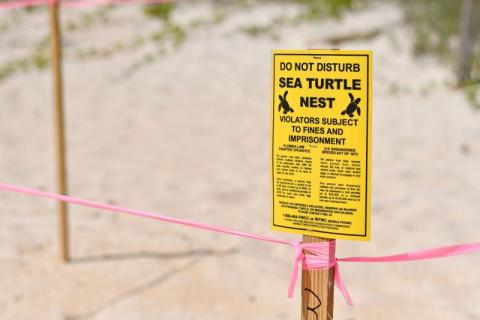
Those small stakes and signs along the beach can be easy to overlook.
During sea turtle season, some of them mark something pretty remarkable: a nest buried beneath the sand, where dozens of eggs are developing just a short distance from the Gulf.
Along North Redington Beach, sea turtle nesting is part of the coastal calendar. Female turtles return to Florida's beaches to lay their eggs, and weeks later, tiny hatchlings begin their journey toward the water.
Visitors can make a real difference during this process. A few everyday habits, from turning off balcony lights to removing beach chairs before sunset, help give nesting turtles and hatchlings a better chance.
According to Pinellas County's Sea Turtle Protection Program, sea turtle nesting and hatching season runs from May 1 through October 31.
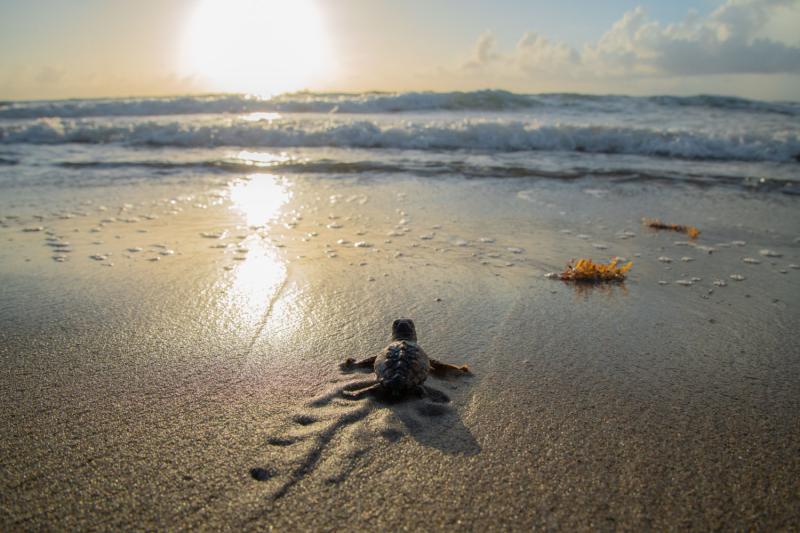
During this period, female turtles come ashore, usually at night, and dig nests in the sand using their rear flippers. A female may lay approximately 100 to 150 eggs in a nest before covering them and returning to the water.
The eggs typically develop for about 45 to 70 days, depending on conditions. When the hatchlings emerge, usually at night, they begin moving toward the Gulf.
Loggerhead sea turtles are the most common nesting species in Pinellas County, although other sea turtle species also nest along Florida's coastline.
For visitors, the important thing to remember is that activity happens throughout the season. Nesting may be underway in one area while hatchlings are already emerging from earlier nests elsewhere.
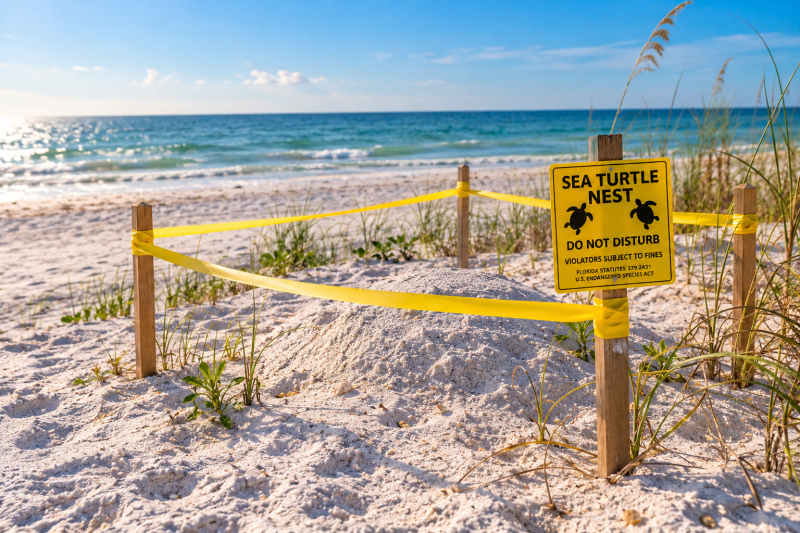
You may notice a small section of beach surrounded by stakes, tape, or warning signs.
These marked areas can indicate sea turtle nests being monitored and protected by authorized personnel. The markers help beachgoers recognize where to keep their distance.
The eggs themselves are buried beneath the sand, so there is usually very little to see.
If you come across a marked nest:
- Stay outside the marked boundary.
- Keep chairs, umbrellas, towels, and other equipment away from it.
- Do not dig, move markers, or disturb the surrounding sand.
- Keep children from playing inside the protected area.
- Leave nest monitoring and any necessary intervention to authorized personnel.
Some nests may not yet be marked or discovered. That is another good reason to avoid digging deep holes or disturbing natural beach areas.
Sea turtles, their eggs, and their nests are protected under state and federal law.
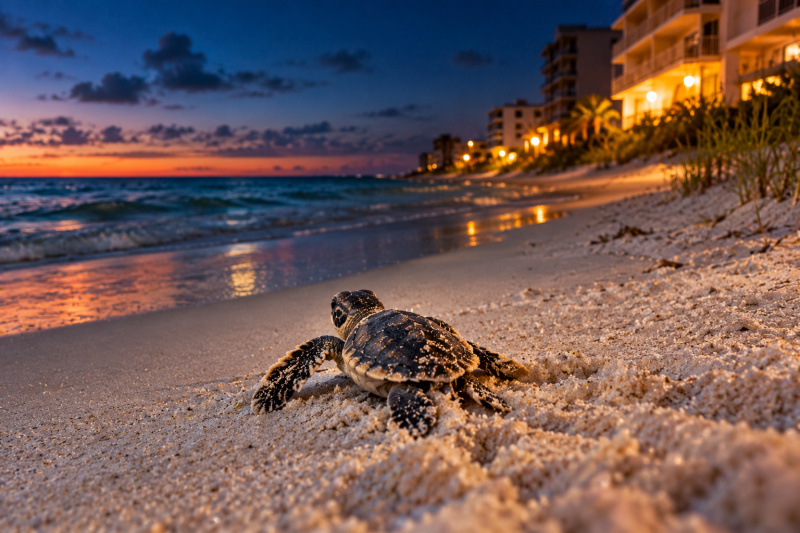
One of the biggest threats to nesting turtles and hatchlings comes from artificial lighting.
When hatchlings emerge from their nests, natural light cues help guide them toward the open water. Bright lights from buildings, balconies, parking areas, and beach equipment can interfere with that process.
Instead of reaching the Gulf, disoriented hatchlings may crawl inland toward buildings or roads. That exposes them to dehydration, predators, and vehicle traffic.
Artificial lighting can also discourage adult females from nesting on an otherwise suitable stretch of beach.
The FWC's sea turtle lighting guidelines emphasize three principles for turtle-friendly lighting:
- Long wavelength: Appropriate amber or red lighting designed to reduce impacts on sea turtles.
- Low: Fixtures mounted close to the ground where practical.
- Shielded: Light directed where needed, with bulbs and direct glare hidden from the beach.
Visitors do not need to become lighting experts. The most useful step is to reduce unnecessary light visible from the sand after sunset.
If you are staying in beachfront accommodations during nesting season, pay attention to your lights after dark.
Close curtains or blinds when indoor lights are on. Turn off unnecessary balcony lighting. Avoid shining flashlights or phone lights toward the beach.
If exterior lighting needs adjustment, contact the property staff rather than changing shared fixtures yourself. Safety lighting should follow applicable local regulations and wildlife-friendly standards.
Many Pinellas County beach communities have lighting ordinances specifically designed to protect nesting sea turtles. The FWC maintains a list of local sea turtle lighting ordinances for anyone who wants to learn more.
These habits matter throughout the May-to-October season, even when no turtles are visible.
A beach chair may look harmless, but it can become a real obstacle to a nesting sea turtle.
Adult females need a clear route from the water to a suitable nesting area farther up the sand. After hatching, young turtles face that same journey in reverse.
Chairs, umbrellas, toys, coolers, and other items left overnight can block their path.
Deep holes and sandcastles can cause problems too. Hatchlings may become trapped in holes, and nesting females can have difficulty moving around large obstacles.
Before leaving the beach for the evening, take a minute to:
- Remove portable chairs, umbrellas, toys, and other beach equipment.
- Fill in holes dug during the day.
- Flatten large sandcastles and sand structures.
- Collect food scraps, wrappers, and other trash.
- Pick up discarded fishing line and tackle when it is safe to do so.
Fishing line deserves special attention because turtles and other marine animals can become entangled in it.
Visitors interested in fishing locally can find additional information in A First-Timer's Guide to Fishing Around North Redington Beach, including shoreline fishing rules and responsible fishing practices.
Hatching is one of the most vulnerable stages in a sea turtle's life.
After developing beneath the sand, hatchlings work their way toward the surface. Once they emerge, they instinctively move toward the water.
That short journey can be dangerous.
Birds and other predators may be nearby. Artificial lights can send hatchlings in the wrong direction. Obstacles can slow them down or trap them before they reach the Gulf.
According to Pinellas County, only about one in a thousand sea turtle hatchlings survives to adulthood.
That statistic helps explain why protecting nesting areas matters so much.
If you happen to see hatchlings emerging, consider yourself fortunate. Watching quietly from a safe distance is the best way to experience the moment.
Keep all lights off, give them space, and allow them to reach the water naturally.

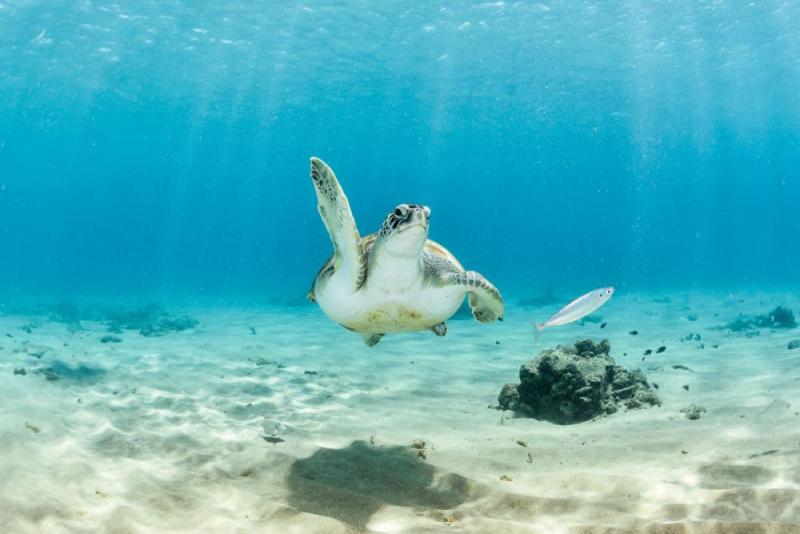
Seeing an adult sea turtle on the sand can be exciting, particularly for someone visiting Florida for the first time.
The most important thing is to avoid interrupting her.
FWC advises people to stay at least 50 feet away from nesting sea turtles. Getting too close can frighten a female and cause her to return to the water without laying her eggs.
If you encounter one:
- Remain quiet and keep your distance.
- Stay behind the turtle rather than standing between her and the water.
- Do not touch, surround, follow, or approach her for photographs.
- Avoid flash photography, flashlights, and bright phone screens.
- Give the turtle an unobstructed path to and from the Gulf.
The same basic rule applies to hatchlings. Watch from a distance and let them move on their own.
There is no need to help a healthy hatchling into the water. Its natural crawl across the sand is an important part of its early life.
Occasionally, a sea turtle or hatchling ends up somewhere it should not be.
A hatchling might be found near a parking area, sidewalk, or building. A turtle could become trapped in debris or show signs of injury.
These situations should be reported to wildlife professionals.
FWC Wildlife Alert Hotline: (888) 404-3922
You can also dial *\FWC** from a mobile phone.
The hotline is available 24 hours a day for wildlife emergencies, including injured, stranded, entangled, or disoriented sea turtles.
Be prepared to describe where the animal is located and what you are seeing. Do not pick up, relocate, or place a turtle into the water unless authorized wildlife personnel instruct you to do so.
You can find additional guidance on the FWC's sea turtle reporting page.
Absolutely.
Swimming, walking, relaxing on the sand, and enjoying the Gulf are all part of a normal North Redington Beach vacation during nesting season.
Most conservation practices fit easily into the day. Respect posted nest areas, clean up before leaving, and keep unnecessary lights off after sunset.
For families, sea turtle season can also be a good opportunity to teach children about coastal wildlife.
Explain why marked nests are protected. Show them how to fill in their sand holes before leaving. Talk about why turtles need darkness to find the water.
Children often remember those small lessons long after the vacation ends.
For visitors spending time along this stretch of the Gulf Coast, The Redington Ambassador offers beachfront accommodations in North Redington Beach. Guests with questions about their stay, beach access, or property-specific guidelines can call (727) 391-9646 or use the contact page.
Beachfront guests have an especially good opportunity to help by keeping the sand clear and minimizing nighttime lighting.
It is a small amount of effort with a meaningful purpose.
North Redington Beach is a place where people come to enjoy the water, spend time with family, and appreciate the Gulf Coast.
For sea turtles, the same shoreline serves a much more important purpose.
It is where another generation begins.
You may never see a nesting turtle during your visit. You might walk past a protected nest without knowing exactly what is happening beneath the sand.
Either way, the choices you make while enjoying the beach can help.
Leave the sand clear. Keep the lights low. Give wildlife space. And let the turtles do what they have been doing along Florida's coast for generations.
For official information, visit Pinellas County Sea Turtle Protection or the Florida Fish and Wildlife Conservation Commission Sea Turtle Program.