Fishing around North Redington Beach is easiest when you start with the rules, then keep the actual fishing plan simple.
This part of the coast gives visitors access to Gulf shoreline fishing, nearby John’s Pass charter boats, bait and tackle stops, and quick drives to Madeira Beach and Redington Shores. It can be a casual morning on the sand or a half-day trip with a captain who handles the details.
The important part is this: Florida fishing rules are real, and they apply even when you are just “trying it for a little while.” Before casting, check the current Florida Fish and Wildlife Conservation Commission saltwater license page and the Go Outdoors Florida licensing portal.
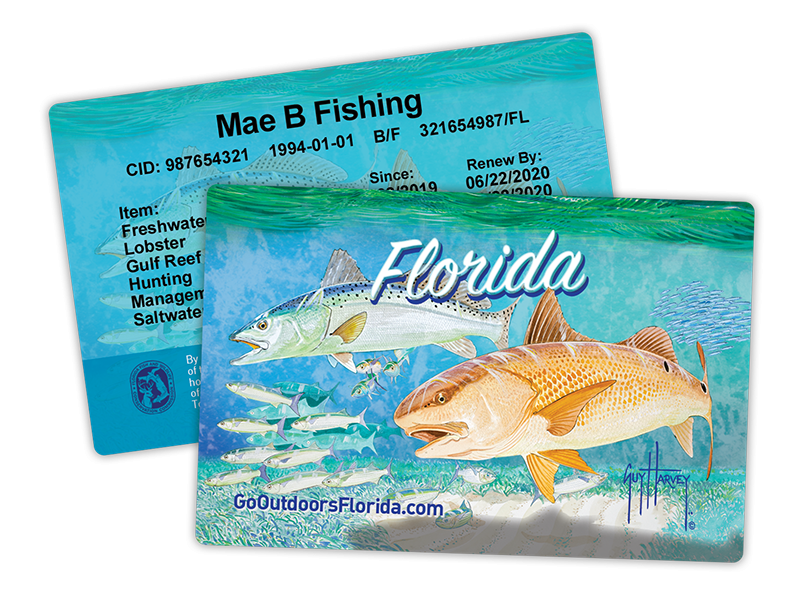
For most visitors, the answer is simple: you probably need a Florida saltwater fishing license.
FWC says a license is required to take or attempt to take saltwater fish, crabs, clams, marine plants, or other saltwater organisms, with limited exceptions. “Attempt” matters. If you cast a line, fish catch-and-release, or help someone fish in a way that counts as assisting with the take, license rules may apply.
A Florida license is also required to land saltwater species in Florida, even if the fish was caught in state or federal waters.
Because regulations change, use official sources before fishing:
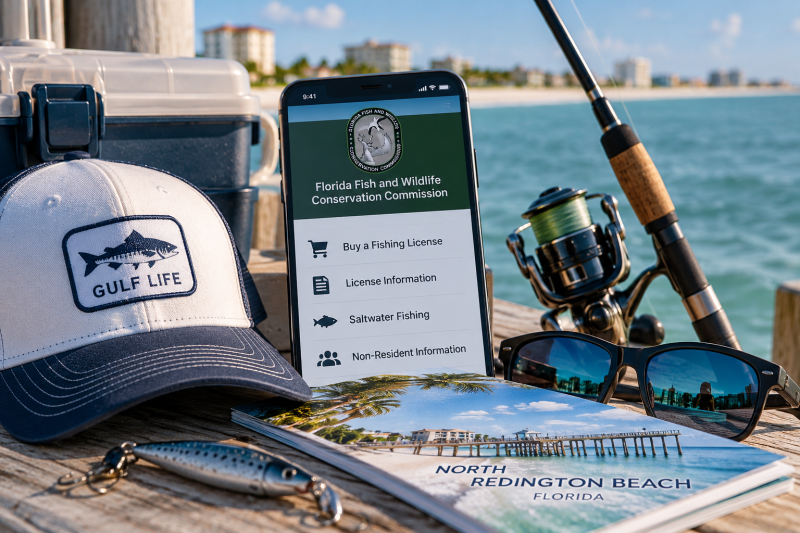
Out-of-state fishing licenses are not valid in Florida.
FWC says non-residents age 16 and older generally need Florida licenses and permits to participate in saltwater fishing. Visitors listed on the National Saltwater Angler Registry still need a Florida recreational saltwater fishing license unless they qualify for a Florida exemption.
For vacationers, the common non-resident options are usually short-term or annual saltwater fishing licenses. FWC currently lists non-resident saltwater license options for 3 days, 7 days, or 1 year, but guests should confirm current pricing and fees directly through FWC or Go Outdoors Florida before buying.
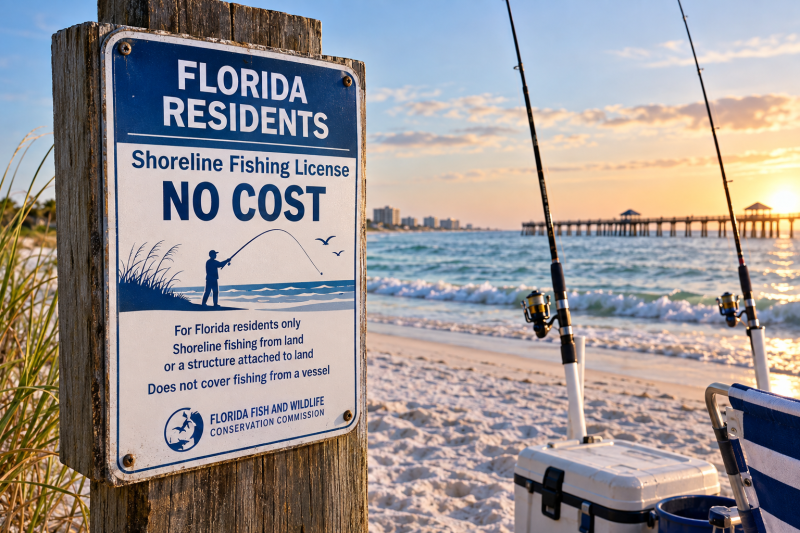
Florida residents have one option that often causes confusion for visitors.
FWC offers a no-cost resident saltwater shoreline fishing license for Florida residents who fish only from land or from a structure attached to land. This shoreline license does not cover fishing from a vessel. It also does not cover shoreline fishing reached by boat, and it does not apply when taking or attempting to take by swimming or diving.
Non-residents do not qualify for the no-cost resident shoreline license. If you are visiting from outside Florida and you plan to fish from the beach, assume you need the appropriate Florida non-resident saltwater license unless a specific exemption applies.
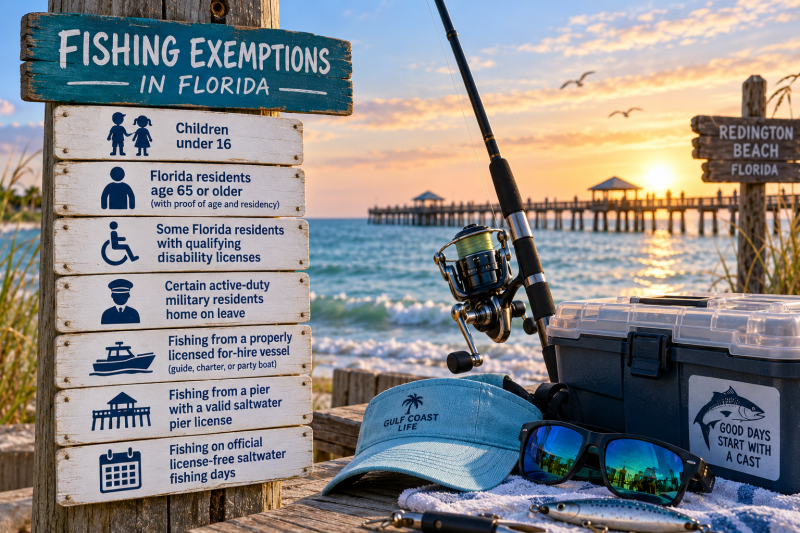
Some people do not need a recreational saltwater fishing license in specific situations.
Common examples include children under 16, Florida residents age 65 or older with proof of age and residency, some Florida residents with qualifying disability licenses, and certain active-duty military residents home on leave.
For saltwater fishing, FWC also lists exemptions for people fishing from a properly licensed for-hire vessel, such as a guide, charter, or party boat. There are also exemptions for fishing from a vessel whose operator has a valid recreational saltwater vessel license, fishing from a pier with a valid saltwater pier license, and fishing on official license-free saltwater fishing days.
Do not guess on exemptions. They depend on residency, age, vessel status, location, permit type, and activity. If you are unsure, check FWC before fishing.
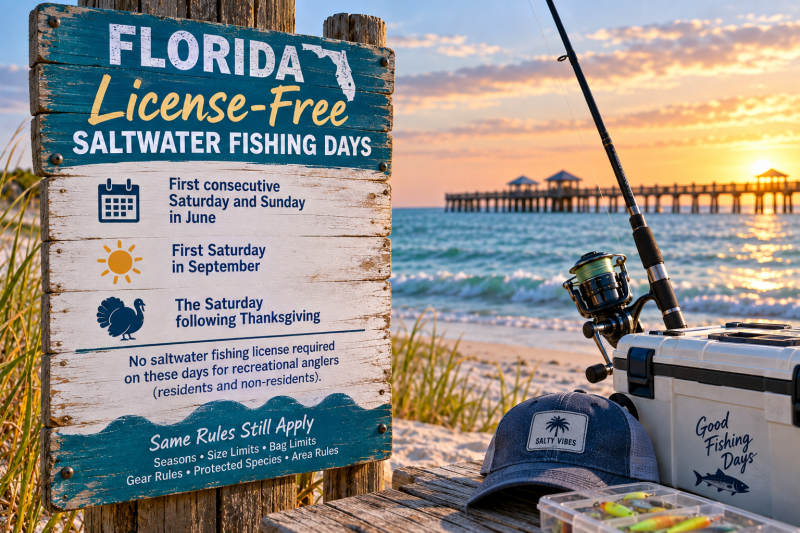
Florida has license-free saltwater fishing days each year.
FWC currently lists license-free saltwater days as the first consecutive Saturday and Sunday in June, the first Saturday in September, and the Saturday following Thanksgiving. On those days, the saltwater fishing license requirement is waived for recreational anglers, including residents and non-residents.
That waiver does not erase the rest of the regulations. Seasons, size limits, bag limits, gear rules, protected species rules, and area rules still apply. A license-free day is a good way to try fishing, but it is not a free pass to ignore harvest rules.
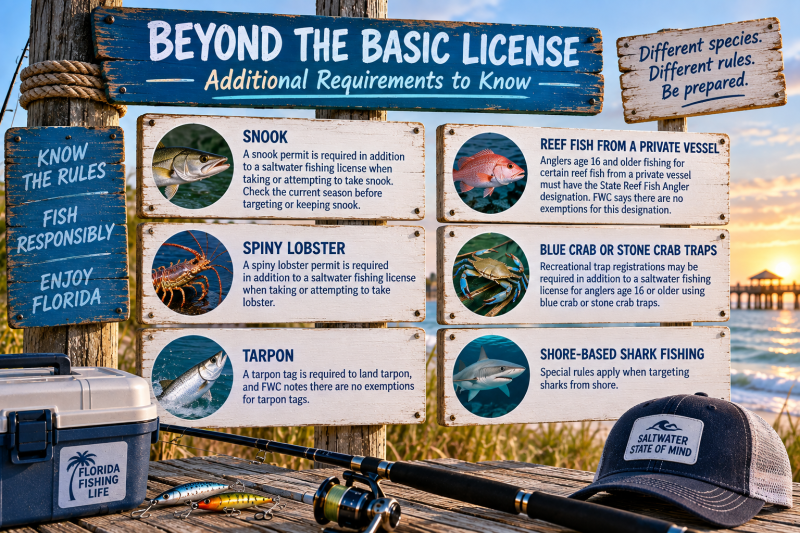
A basic saltwater license may not be the only requirement.
Here are the big first-timer items to know:
- Snook: FWC requires a snook permit in addition to a saltwater fishing license when taking or attempting to take snook. Check the current season before targeting or keeping snook.
- Spiny lobster: A spiny lobster permit is required in addition to a saltwater fishing license when taking or attempting to take lobster.
- Tarpon: A tarpon tag is required to land tarpon, and FWC notes there are no exemptions for tarpon tags.
- Reef fish from a private vessel: Anglers age 16 and older fishing for certain reef fish from a private vessel must have the State Reef Fish Angler designation. FWC says there are no exemptions for this designation.
- Blue crab or stone crab traps: Recreational trap registrations may be required in addition to a saltwater fishing license for anglers age 16 or older using blue crab or stone crab traps.
- Shore-based shark fishing: Special rules apply when targeting sharks from shore.
This is where many visitors get tripped up. The license gets you started, but the species, gear, and fishing method can add more requirements.
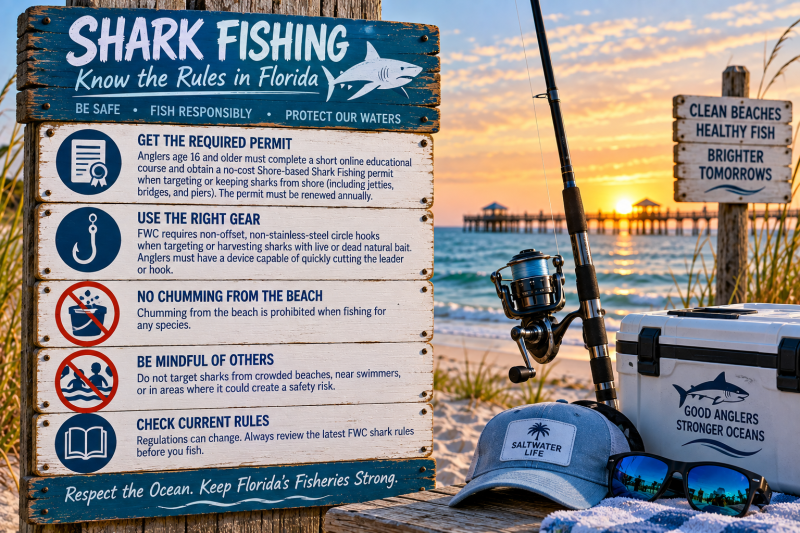
Shark fishing has its own rules and should not be treated as casual beach fishing.
FWC requires shore-based shark anglers age 16 and older to complete an online educational course and obtain a no-cost Shore-based Shark Fishing permit when targeting or keeping sharks from shore, including from structures attached to shore such as jetties, bridges, and piers. The permit must be renewed annually.
FWC also says the permit can be required for anglers 16 and older fishing from shore for any species if they use certain heavy shark-style gear or deploy bait by means other than casting while using a large hook.
There are also gear and handling rules. FWC requires non-offset, non-stainless-steel circle hooks when targeting or harvesting sharks with live or dead natural bait. Anglers targeting sharks must have a device capable of quickly cutting the leader or hook. Chumming from the beach is prohibited when fishing for any species.
For a visitor fishing around a public beach, the safest practical advice is simple: do not target sharks from crowded beaches, near swimmers, or without reviewing the current FWC shark rules first.
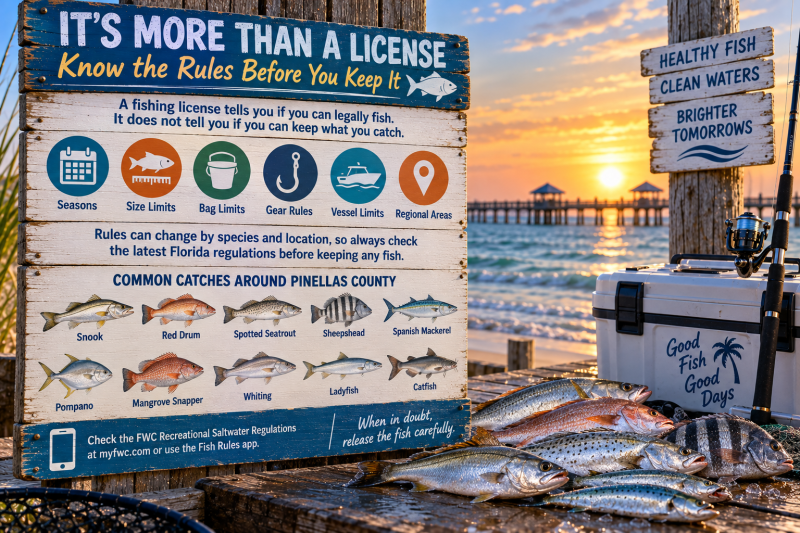
A license only answers whether you can legally fish. It does not answer whether you can keep what you catch.
Florida saltwater species have different seasons, size limits, bag limits, gear rules, vessel limits, and regional management areas. Rules can change by species and location. Around Pinellas County, common inshore or nearshore catches may include species such as snook, red drum, spotted seatrout, sheepshead, Spanish mackerel, pompano, mangrove snapper, whiting, ladyfish, and catfish, but what is legal to keep depends on the current regulations.
Use the FWC Recreational Saltwater Regulations page or the Fish Rules app before keeping anything. When in doubt, release the fish carefully.
FWC says licenses and permits are available online through Go Outdoors Florida, in person at license agents or tax collector offices, by phone, and through the Fish|Hunt FL app.
For visitors, buying online before the first fishing day is usually easiest. Keep proof of the license with you while fishing. Also check whether your planned activity needs an added permit, designation, or registration.
If you book a charter, ask the operator what license coverage is included. A valid licensed for-hire vessel can cover individual saltwater license requirements for passengers, but guests should still ask about tarpon tags, reef fish designations, species rules, and what the trip is allowed to harvest.
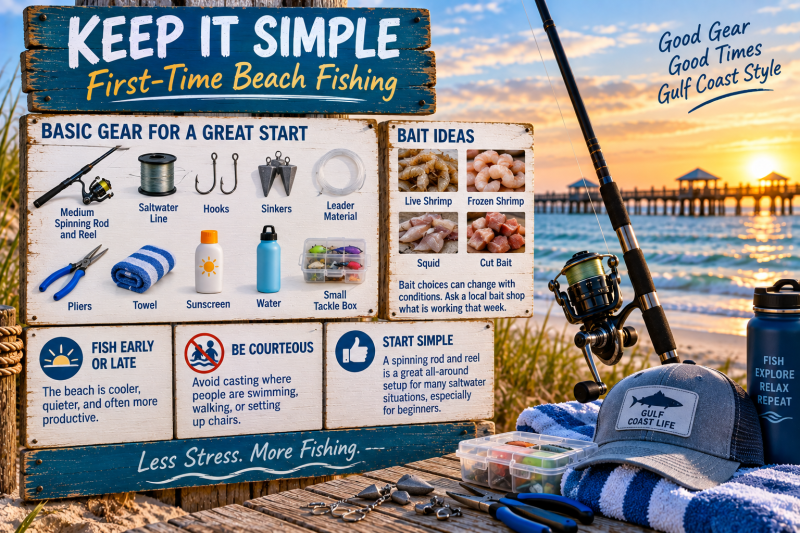
Keep the first beach session simple.
A medium spinning rod and reel, saltwater line, hooks, sinkers, leader material, pliers, a towel, sunscreen, water, and a small tackle box are enough for many beginner outings. FWC’s first-time angler guidance points beginners toward a spinning rod and reel as a good all-around setup for many saltwater situations.
For bait, ask locally. Frozen shrimp, live shrimp, squid, cut bait, and small baitfish are common saltwater choices, but conditions change. Local shops can tell you what is practical that week.
Fish early or late when the beach is cooler and less crowded. Avoid casting where people are swimming, walking, or setting up chairs.
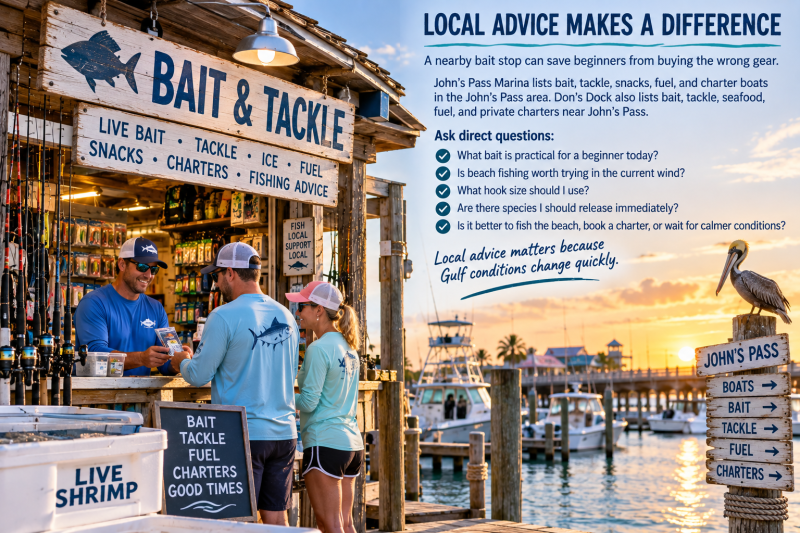
A nearby bait stop can save beginners from buying the wrong gear.
John’s Pass Marina lists bait, tackle, snacks, fuel, and charter boats in the John’s Pass area. Don’s Dock also lists bait, tackle, seafood, fuel, and private charters near John’s Pass.
Ask direct questions:
- What bait is practical for a beginner today?
- Is beach fishing worth trying in the current wind?
- What hook size should I use?
- Are there species I should release immediately?
- Is it better to fish the beach, book a charter, or wait for calmer conditions?
Local advice matters because Gulf conditions change quickly.
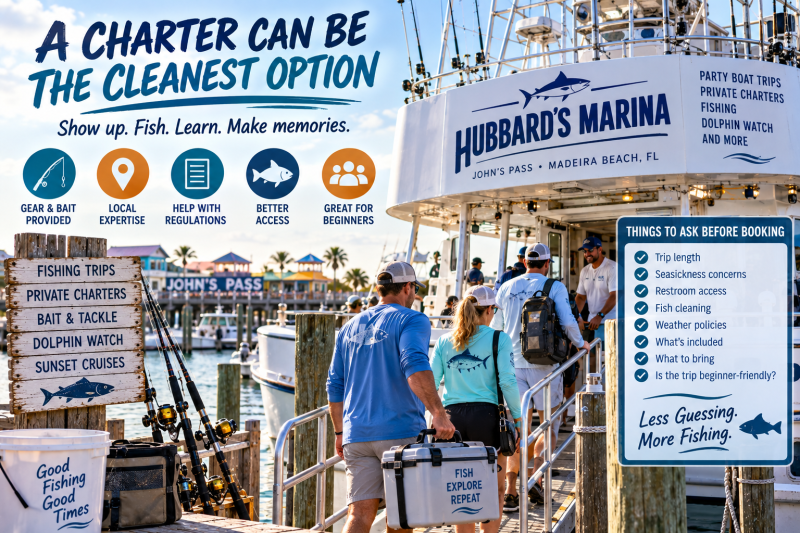
For a first-time angler, a charter can be the cleanest option.
Hubbard’s Marina at John’s Pass offers party boat fishing trips, private charters, and other water activities. A licensed charter or party boat can help with gear, bait, routing, regulations, fish handling, and timing.
That matters if you are new to saltwater fishing. You can show up, learn from people who fish the area regularly, and avoid guessing about access, tackle, and where to go.
Before booking, ask about trip length, seasickness, restroom access, fish cleaning, weather policies, what is included, and what guests should bring. Also ask whether the trip is beginner-friendly.
The Intracoastal side can look tempting, especially around docks, bridges, canals, and seawalls.
Access is the issue. Many docks, seawalls, and waterfront spaces are private. Do not fish from private property, resort docks, marina docks, bridges, or boat ramps unless fishing is clearly allowed. Do not cast near boats, people, pets, or posted areas.
If you want to fish calmer Intracoastal waters without worrying about access, use a guide or charter that can legally take you where fishing makes sense.
Good fish handling starts before the first cast.
Use pliers. Wet your hands before touching fish. Keep fish low and close to the water when possible. Release undersized, out-of-season, or unidentified fish quickly. Do not leave fish on hot sand while deciding what to do. If you plan to keep fish, know the current size and bag limits before the fish is in your hand.
Discarded fishing line is dangerous for birds, turtles, fish, and beachgoers. Pack out every piece of line, bait packaging, hook, and trash.
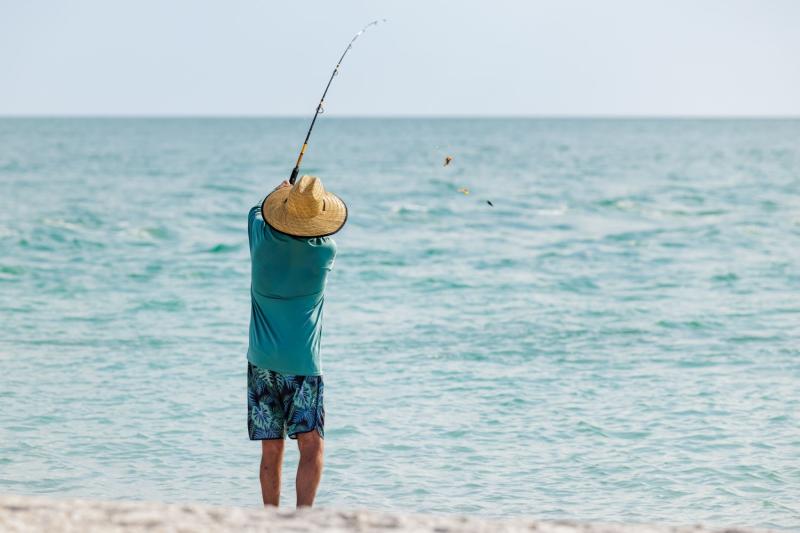
Fishing does not have to take over the trip.
Try a short beach session before breakfast. Visit a bait shop and ask questions. Book a half-day trip from John’s Pass. Or use fishing as a quiet evening plan after the beach clears.
For a nearby food plan after fishing, the guide to A Casual Food Day Around North Redington Beach is a useful companion. For a wider route that includes Madeira Beach and John’s Pass, use Redington, Madeira, and John’s Pass in One Easy Day.
Before fishing around North Redington Beach, run through this list:
- Confirm whether you need a Florida saltwater fishing license.
- Check whether you qualify for an exemption.
- Remember that non-residents do not qualify for the no-cost resident shoreline license.
- Check whether your target species or method needs an added permit.
- Review current seasons, size limits, bag limits, and gear rules.
- Avoid shark fishing unless you have reviewed FWC shark requirements.
- Fish away from swimmers and crowded beach areas.
- Use public or clearly permitted access only.
- Pack out line, hooks, bait containers, and trash.
- Release fish carefully when required or when you are unsure.
For travelers who want a North Redington Beach base close to Gulf shoreline fishing, local restaurants, and John’s Pass charter options, The Redington Ambassador offers beachfront vacation accommodations, with stay-specific questions available by phone at (727) 391-9646 or through the contact page.
A first fishing day does not need to be complicated. Read the rules before you cast, buy the right license if required, keep your setup manageable, ask local questions, and respect the beach.
If the fish cooperate, that is a bonus. If they do not, you still spent time by the Gulf